Find the path of water
The visible puddle is not always the full affected area. Moisture readings help trace water into wall cavities, flooring systems, cabinets, and nearby rooms.
The water source must be stopped before drying can succeed. Sewage or other contaminated water requires additional controls and should be identified at the start.
Remove what cannot be saved
Material decisions depend on water category, time, porosity, condition, and the ability to dry. Sound structural materials may be dried and cleaned, while damaged porous finishes may need removal.
Containment helps protect the rest of the building when mould or contaminated debris is disturbed.
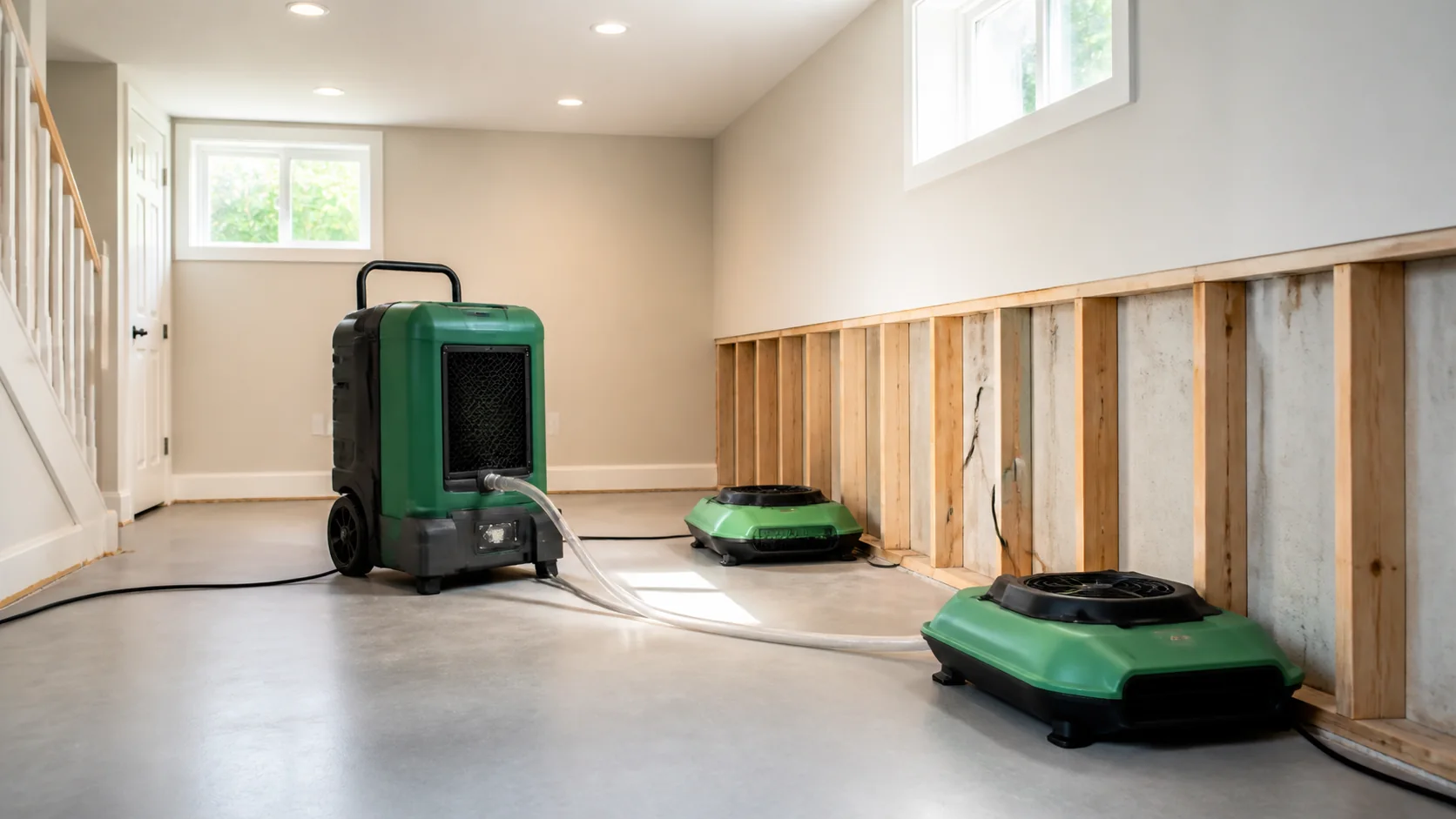
Measure progress before rebuilding
Air movement and dehumidification are adjusted to the space. Moisture is checked during drying so the project is based on readings instead of a fixed number of days.
Rebuilding too soon can trap moisture. A documented dry condition supports a better repair.
Answers before you book
How quickly should mould be checked?+
Arrange an inspection as soon as you see growth, smell a persistent musty odour, or find water damage. Early action usually keeps the affected area smaller.
Can I stay in the building during remediation?+
It depends on the size, location, occupants, and work plan. We explain containment and access limits before work begins so you can make a safe plan.
Will mould come back?+
Mould can return if moisture returns. A sound plan addresses affected materials and the leak, condensation, humidity, or ventilation problem that allowed growth.
Do you provide a written estimate?+
Yes. After the site is assessed, you receive a clear scope that explains the recommended work and next steps.