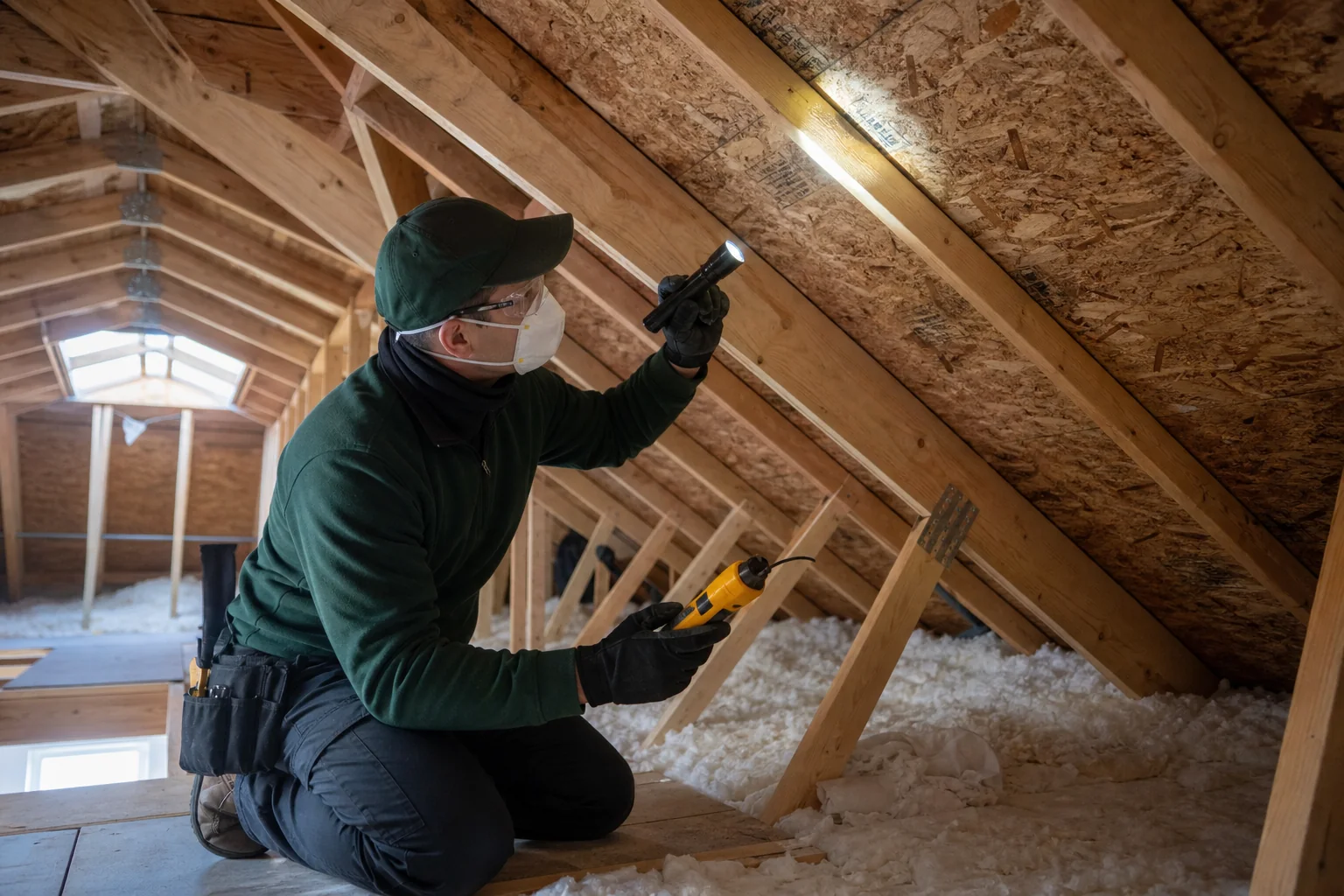
Common attic moisture sources
Bathroom and kitchen exhaust ducts should discharge outdoors. Gaps around lights, hatches, wiring, and wall tops can also move warm moist air into the attic. Snow or roof leaks may add direct water.
Dark staining on roof sheathing needs an informed review. The pattern, moisture readings, insulation, ventilation, and duct layout all help explain what happened.
A controlled attic work plan
Access is protected before work starts. The chosen method must suit the roof sheathing, framing, insulation, and amount of growth. Loose contamination and damaged material are handled without spreading debris through the home.
Where appropriate, the plan also covers insulation disturbance, air sealing coordination, and safe exhaust routing.
What happens after removal?
The attic needs the right balance of air sealing, insulation, ventilation, and leak repair. No single product replaces moisture control.
We provide clear observations so the relevant roofing, insulation, ventilation, or electrical work can be coordinated in the right order.
Answers before you book
How quickly should mould be checked?+
Arrange an inspection as soon as you see growth, smell a persistent musty odour, or find water damage. Early action usually keeps the affected area smaller.
Can I stay in the building during remediation?+
It depends on the size, location, occupants, and work plan. We explain containment and access limits before work begins so you can make a safe plan.
Will mould come back?+
Mould can return if moisture returns. A sound plan addresses affected materials and the leak, condensation, humidity, or ventilation problem that allowed growth.
Do you provide a written estimate?+
Yes. After the site is assessed, you receive a clear scope that explains the recommended work and next steps.