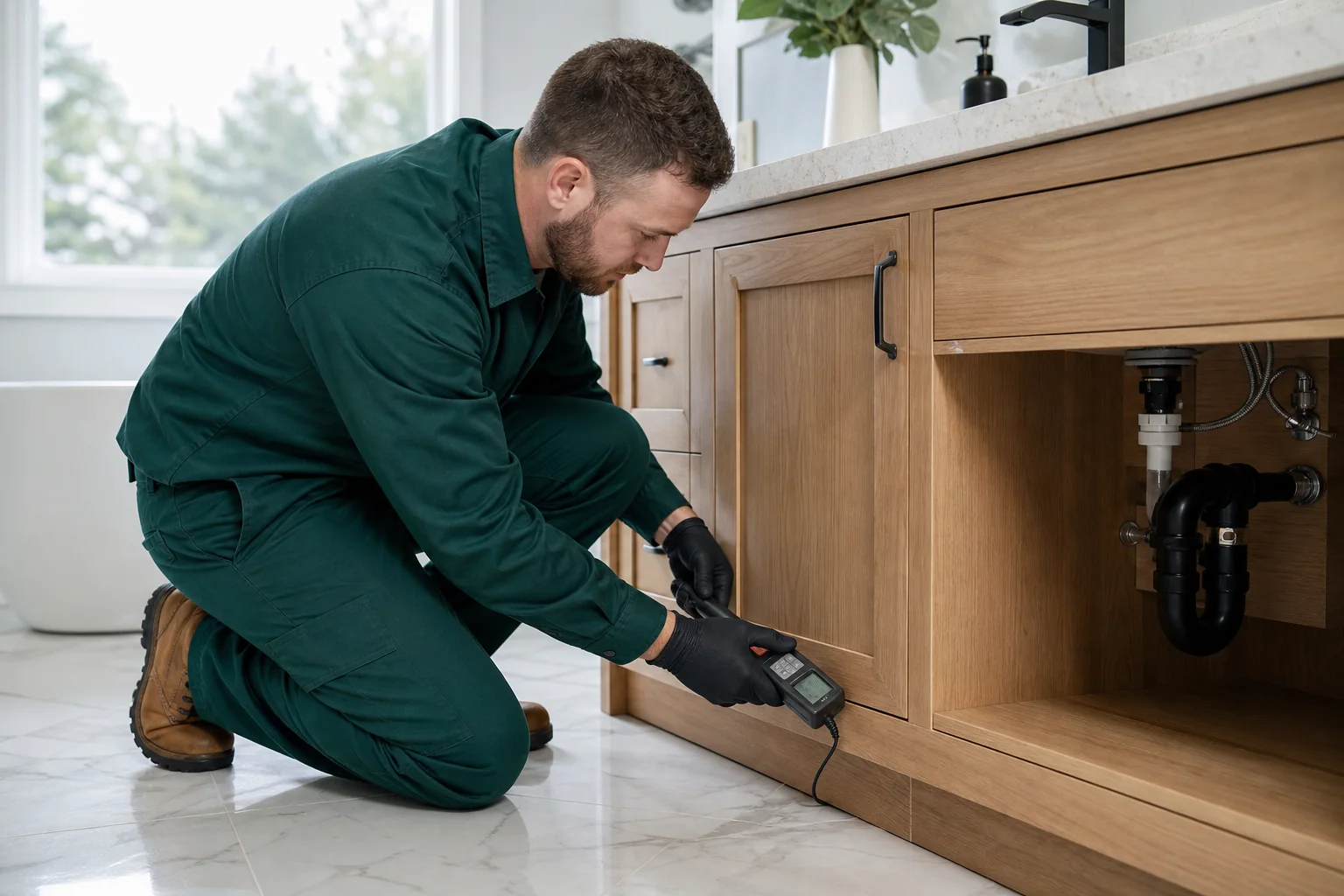
Control indoor humidity
Use bathroom and kitchen exhaust fans that vent outdoors. Run fans during moisture-producing activities and long enough afterward to clear damp air. Dehumidification can help in basements during humid weather.
Watch for condensation on windows, pipes, foundation walls, and cold corners. Repeated condensation is a sign that humidity, insulation, or air movement needs attention.
Repair water entry
Roof, flashing, plumbing, foundation, and drainage issues should be corrected promptly. Keep gutters and downspouts moving water away from the building. Check stored items and finished walls near foundation areas.
After a leak, dry materials quickly and verify hidden spaces when water may have travelled beyond the visible area.
Maintain the whole system
Attic insulation, ventilation, and air sealing work together. Heating and cooling systems also affect humidity and surface temperature. Changes to one part of the building can affect another.
A prevention review can help prioritize practical repairs instead of relying on coatings or fragrances that do not correct the cause.
Answers before you book
How quickly should mould be checked?+
Arrange an inspection as soon as you see growth, smell a persistent musty odour, or find water damage. Early action usually keeps the affected area smaller.
Can I stay in the building during remediation?+
It depends on the size, location, occupants, and work plan. We explain containment and access limits before work begins so you can make a safe plan.
Will mould come back?+
Mould can return if moisture returns. A sound plan addresses affected materials and the leak, condensation, humidity, or ventilation problem that allowed growth.
Do you provide a written estimate?+
Yes. After the site is assessed, you receive a clear scope that explains the recommended work and next steps.