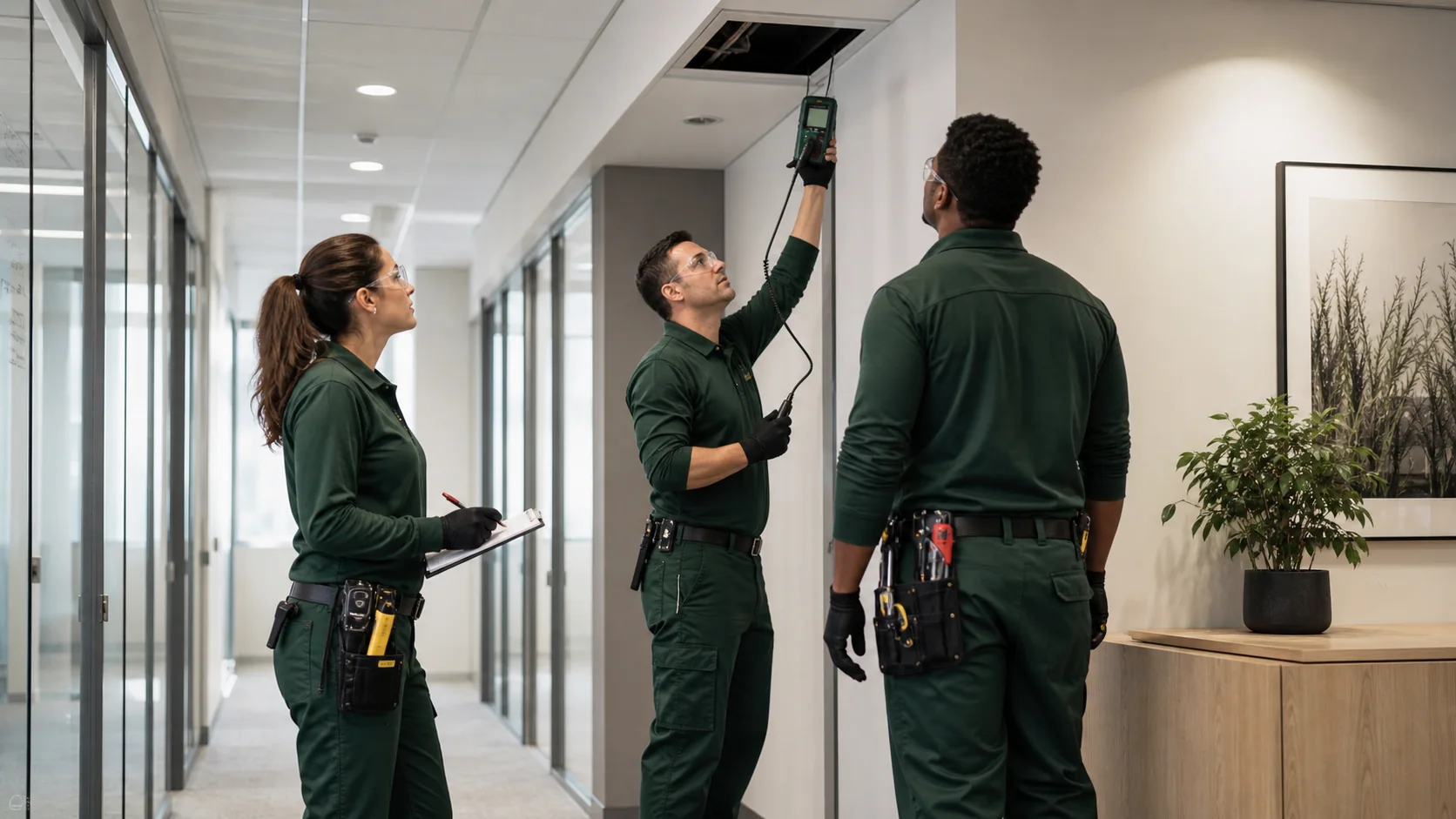
A scope built around the property
We review affected areas, occupancy, air movement, materials, and the water event. The plan can divide work into phases so critical operations continue where conditions allow.
Property managers receive clear points of contact and documentation. Communication is especially important when several trades or occupants are involved.
Control the work zone
Containment, access routes, equipment placement, and waste movement are planned before work begins. Negative air and filtration may be used based on the project. Clean zones are protected from work activity.
Work schedules can be coordinated around lower-traffic periods when practical. Life-safety systems and building rules remain part of the plan.
Closeout and prevention
Completion includes a detailed visual review and, where specified, independent post-remediation verification. Dry materials and corrected water sources support a sound handoff to rebuilding.
We can also flag maintenance, envelope, drainage, or humidity conditions that should be addressed to reduce recurrence.
Answers before you book
How quickly should mould be checked?+
Arrange an inspection as soon as you see growth, smell a persistent musty odour, or find water damage. Early action usually keeps the affected area smaller.
Can I stay in the building during remediation?+
It depends on the size, location, occupants, and work plan. We explain containment and access limits before work begins so you can make a safe plan.
Will mould come back?+
Mould can return if moisture returns. A sound plan addresses affected materials and the leak, condensation, humidity, or ventilation problem that allowed growth.
Do you provide a written estimate?+
Yes. After the site is assessed, you receive a clear scope that explains the recommended work and next steps.