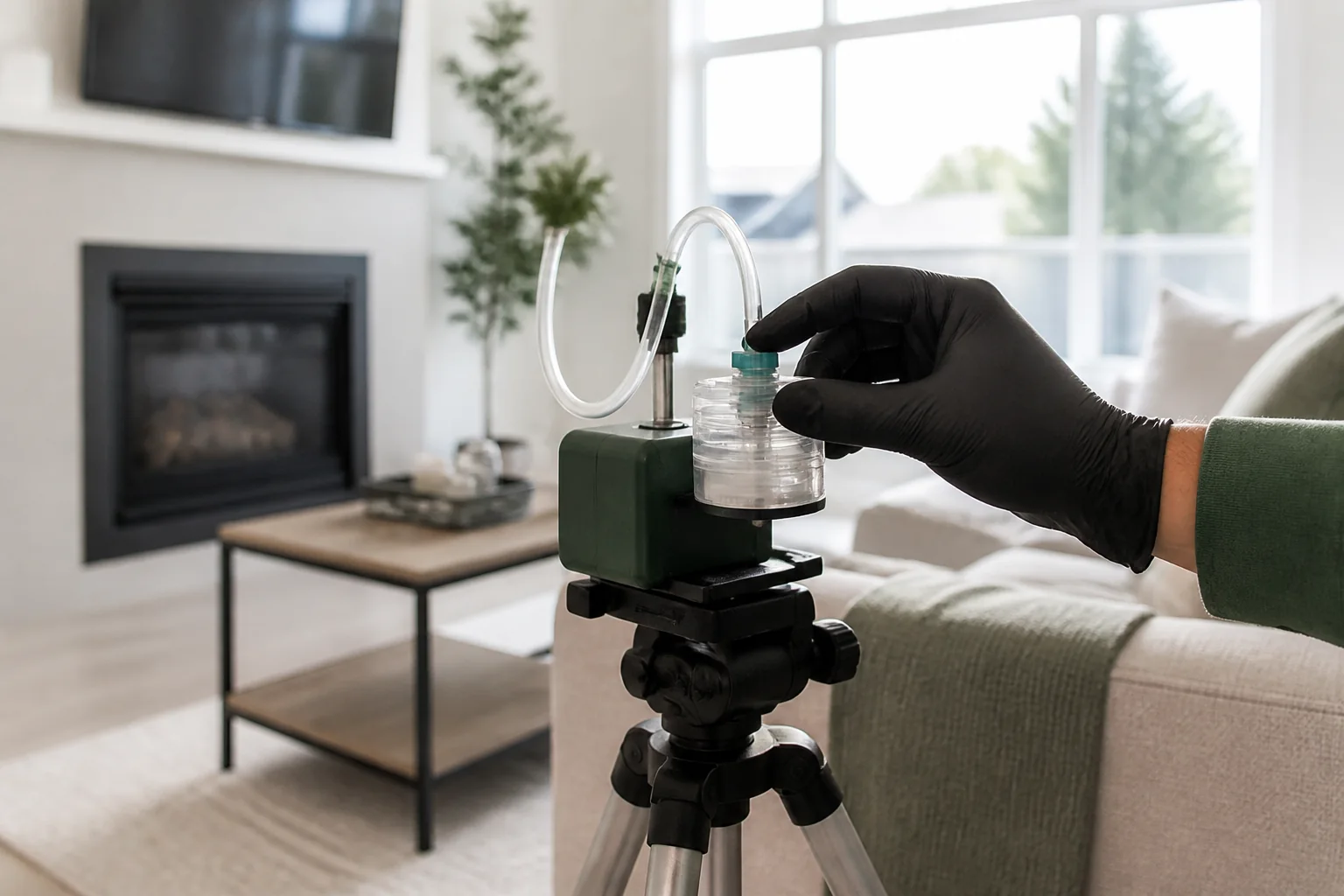
Do you always need mould testing?
No. Visible mould and clear water damage can often be addressed without spending money on broad sampling. Testing is more useful when the source is unclear, a sensitive occupant is involved, documentation is needed, or post-remediation verification is part of the plan.
We begin with the decision you need to make. That keeps the sampling plan focused and the results useful.
How sampling supports remediation
Surface or air samples may be selected based on site conditions. Samples are documented and sent to an appropriate laboratory when laboratory analysis is required.
Results need context. A list of mould types by itself does not explain the moisture source or the condition of building materials. We connect findings to the site inspection and practical next steps.
Clear communication, not alarm
Mould information can sound technical. We explain what the results can and cannot show in plain language. Recommendations focus on correcting conditions and safely dealing with affected materials.
If follow-up work is needed, the scope identifies the areas, controls, and verification steps that make sense for the property.
Answers before you book
How quickly should mould be checked?+
Arrange an inspection as soon as you see growth, smell a persistent musty odour, or find water damage. Early action usually keeps the affected area smaller.
Can I stay in the building during remediation?+
It depends on the size, location, occupants, and work plan. We explain containment and access limits before work begins so you can make a safe plan.
Will mould come back?+
Mould can return if moisture returns. A sound plan addresses affected materials and the leak, condensation, humidity, or ventilation problem that allowed growth.
Do you provide a written estimate?+
Yes. After the site is assessed, you receive a clear scope that explains the recommended work and next steps.