Why mould grows in basements
Basements stay cooler than the rest of a building. Warm humid air can condense on cold foundation walls, pipes, and stored items. Small leaks may also wet drywall, insulation, baseboards, and framing before the problem is noticed.
Finishing materials can hide the extent of damage. A careful assessment checks beyond the visible patch and follows the path of water.
How basement remediation works
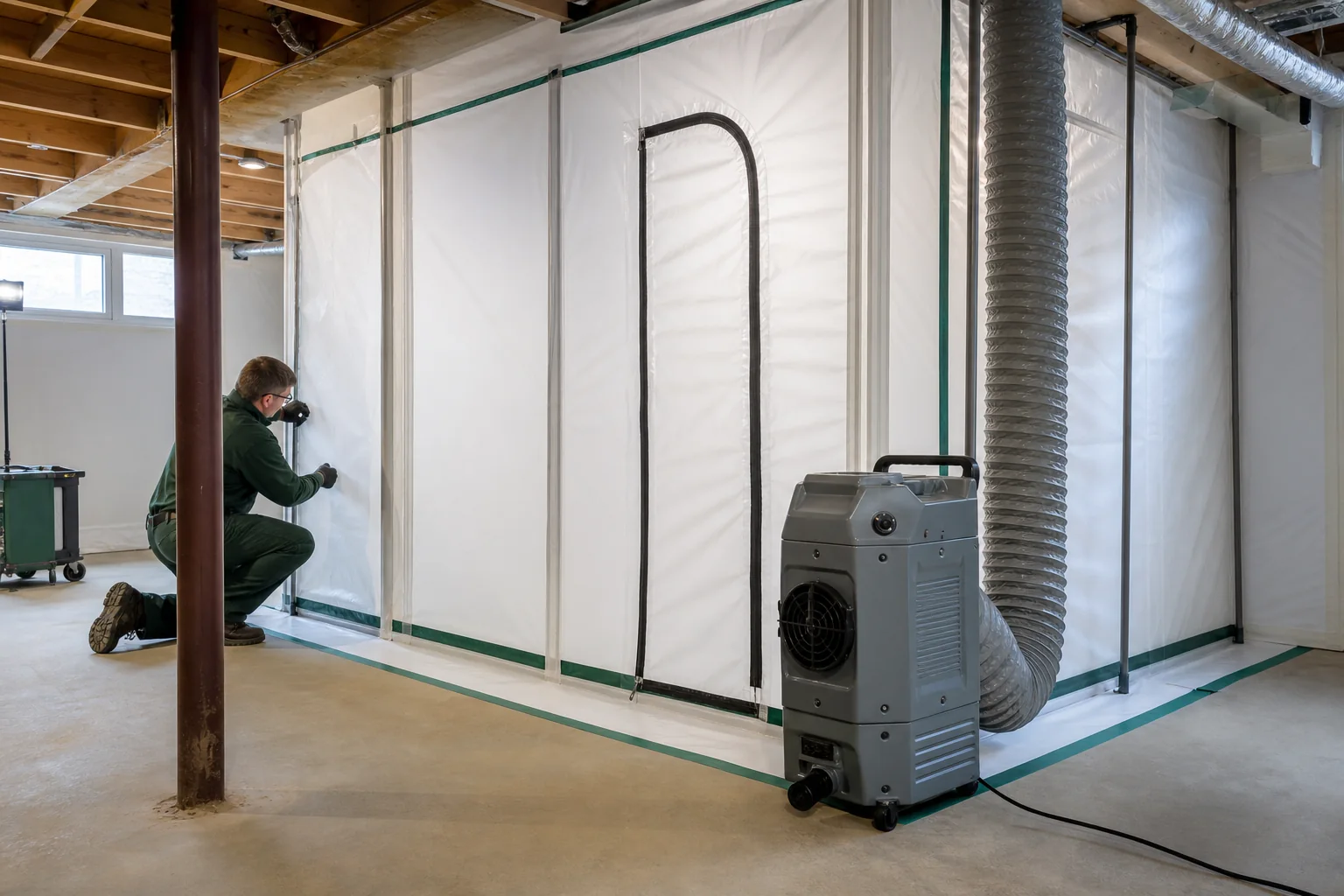
The work area is separated from clean spaces. Air controls and careful material handling reduce the spread of dust and spores. Unsalvageable porous materials are removed, while suitable structural surfaces are cleaned with methods chosen for the material and condition.
Drying is measured, not guessed. The area should be ready for repair before new finishes are installed.
Preventing a repeat problem
Long-term control may involve repairing leaks, improving drainage, sealing air leaks, insulating cold surfaces, or using properly sized dehumidification. The right fix depends on how moisture enters the space.
We explain which correction belongs in the remediation scope and when a separate trade may be required.
Answers before you book
How quickly should mould be checked?+
Arrange an inspection as soon as you see growth, smell a persistent musty odour, or find water damage. Early action usually keeps the affected area smaller.
Can I stay in the building during remediation?+
It depends on the size, location, occupants, and work plan. We explain containment and access limits before work begins so you can make a safe plan.
Will mould come back?+
Mould can return if moisture returns. A sound plan addresses affected materials and the leak, condensation, humidity, or ventilation problem that allowed growth.
Do you provide a written estimate?+
Yes. After the site is assessed, you receive a clear scope that explains the recommended work and next steps.